
Clear scope before rebuild
You get a written plan that separates drying, removal, and repairs, so you know what is happening and why before materials are ordered.
Serving Modesto, California & surrounding areas
24/7 Emergency Response
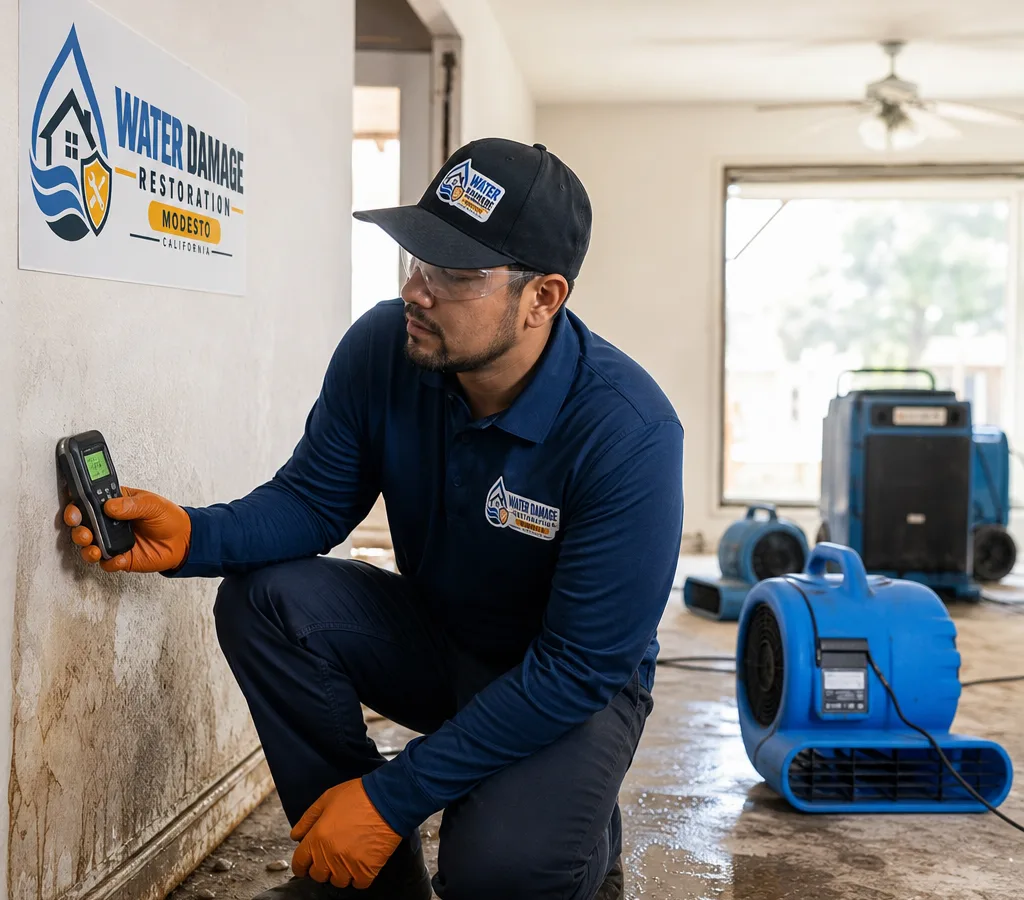
Water damage repair in Modesto
Dry it out, document it, repair it, and help prevent repeat damage. Get a clear scope, a realistic timeline, and skilled repairs for homes and small businesses.
Stop the spread of damage
When you need water damage repair in Modesto, time matters. Water can spread under flooring, wick into drywall, and soak insulation long before it is visible. The goal is to dry the structure to safe moisture levels, remove damaged materials that cannot be salvaged, and rebuild cleanly so you can get back to normal.
Water Damage Restoration Modesto handles the full repair path: inspection, moisture mapping, water extraction, drying and dehumidification, controlled demolition when needed, sanitation for contaminated water, and repairs that put your space back together. We also document conditions with photos and written notes so you have a clear record for property management or insurance conversations.
In Modesto, we regularly see damage from supply line failures, water heater leaks, roof leaks after storms, and backed-up drains. Even in dry weather, slow leaks can cause swelling, cupping hardwood, bubbling paint, and musty odors. If you are seeing any of those signs, it is worth getting an inspection before the damage spreads.
From wet structure to finished room
A proper water damage repair job is more than placing a few fans. It starts with identifying the water source and the affected materials, then choosing the right drying strategy based on what is wet and how the building is built.
Typical scope we handle in Modesto homes and small commercial spaces includes:
If your property has had repeated issues, we can also point out common risk areas such as failing supply valves, deteriorated tub caulk, or HVAC condensate drain problems.
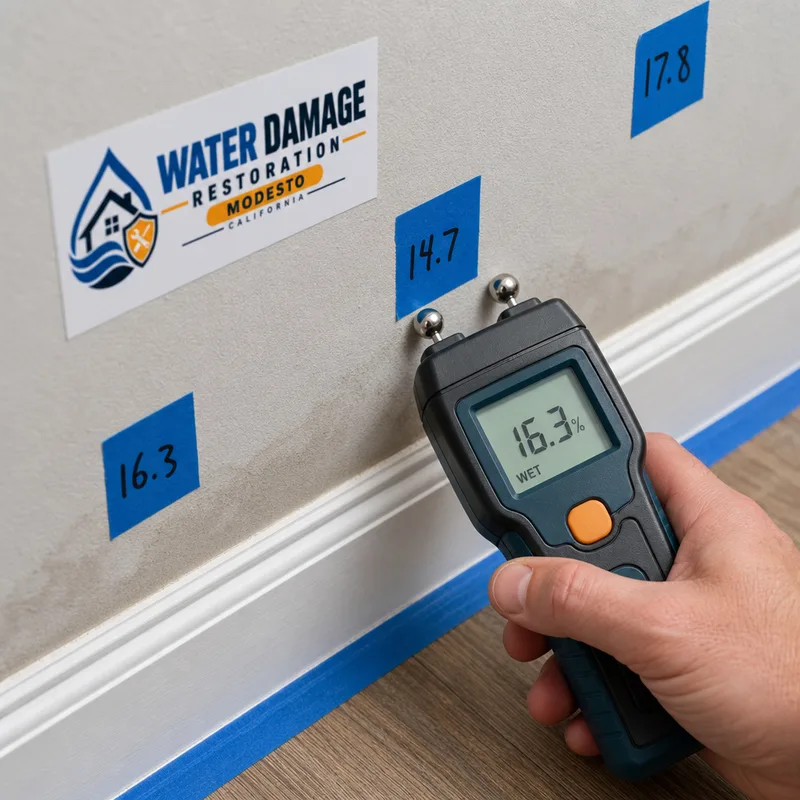
A controlled repair plan
From moisture checks through finish matching, each part of the scope is planned to protect your property and reduce surprises.
You get a written plan that separates drying, removal, and repairs, so you know what is happening and why before materials are ordered.
Drying decisions are based on moisture checks of affected areas, including edges of the damage where water often travels.
When demolition is needed, we isolate the work area, protect floors, and manage debris so the rest of the home stays usable when possible.
Clean water, gray water, and sewage require different handling. We explain what category applies and what it means for cleaning and material removal.
Texture, paint sheen, baseboard profiles, and flooring transitions matter. We aim for repairs that blend with the rest of the room.
Measured from start to finish
The sequence moves from source control and mitigation through verified drying, sanitation when needed, and finished repairs.
Request Emergency ServiceWe assess what happened, check for active water, and map the affected areas so the scope is accurate.
We extract water, set drying equipment, and remove materials that are clearly unsalvageable or blocking airflow into wet cavities.
We take moisture readings over time, adjust equipment as conditions change, and maintain photos and notes for insurance or property records.
For contaminated water events, we clean and disinfect affected areas and recommend appropriate disposal for porous materials.
After drying is verified, we repair drywall, paint, trim, and flooring as needed, then review the finished work and prevention steps with you.
Scope and cost factors
Water damage repair in Modesto typically ranges from about $900 to $6,500+, depending on how far the water traveled and how much rebuilding is required. A small, contained leak with limited drywall removal and a few days of drying is often on the lower end, while multi-room damage with flooring, cabinets, or contaminated water can push costs higher.
Price drivers include the water category, square footage affected, how quickly the water was discovered, access to wet cavities, required containment, and the finishes that must be matched. The exact cost is confirmed after an on-site inspection and moisture mapping.
Request Emergency ServiceCentral Valley property context
Two properties on the same street can need very different repair scopes after a leak. The building assembly and what sits under or behind the wet area change the plan.
Request Emergency ServiceMany Central Valley homes sit on slabs, which can trap moisture at flooring edges and under underlayment. Raised floors can allow water to travel farther under the subfloor and into insulation.
Laminate and engineered wood can swell at seams quickly. Tile may look fine while moisture remains in thinset, grout lines, or the underlayment beneath transitions.
Water often hides under kitchen and vanity cabinets. We check toe-kicks and adjacent drywall so damage is not missed.
Hot, dry stretches can dry surfaces while leaving dampness in wall cavities. The repair plan should rely on measured moisture content, not just how the room feels.
If you are comparing providers, look for a team that discusses moisture readings, affected material classes, and what must be removed for proper drying. A plan based only on setting fans can lead to later staining, odor, or warped materials.
Answers before work begins
You should start mitigation the same day whenever possible, because moisture spreads through drywall, trim, and flooring seams quickly. Even if the surface looks dry, water can remain in wall cavities, under baseboards, and in subfloor layers, which raises the chance of odor and material failure.
Yes. We can manage the full water damage repair scope, including extraction, drying, selective demolition, and rebuild work such as drywall, texture, paint, trim, and common flooring transitions. Keeping it under one plan reduces gaps between dry-out and put-back.
Sometimes, depending on where the moisture is and whether the cavity can dry without opening it. If readings show wet insulation or framing, removing a controlled section of drywall and trim can shorten drying time and prevent moisture from remaining trapped behind finishes.
Clean water is typically from a broken supply line or rain intrusion, while sewage backups are contaminated and require stricter removal and sanitation. With contaminated water, porous materials such as carpet pad, insulation, and affected drywall are often not salvageable, and cleaning protocols are more intensive.
Yes. We provide photos, moisture readings, and a written scope of what was affected and what work was performed, which helps support an insurance claim. Final coverage decisions are made by the carrier, but clear documentation reduces confusion during review.
Drying commonly takes several days, and repairs can add time depending on materials, finish matching, and how many rooms are involved. After the inspection, we can provide a realistic sequence for drying, removal, and rebuild so you can plan around access and occupancy.
Start with an inspection
Tell us what happened and what areas are affected. We will schedule an inspection, map the moisture, and lay out the steps to dry and repair the space the right way.